Good day! Happy Friday y’all! This morning I woke up to a serious case of helmet head. Having naturally curly hair— I know better than to fall asleep with wet hair. To be honest— I couldn’t have cared less last night. It was beyond humid due to the storm. I was going to end up with a hot mess anyways.
Of course, I woke up immediately annoyed with myself. The mirror wasn’t my friend. As I looked over at my handsome boyfriends sleeping face, I admittedly was slightly jealous that his curls always look perfect. This simple thought prompted this mornings post.
Let’s Talk Locs!
Welcome to Fun Fact Friday!
In 2015, Guliana Rancic of “E! Fashion Police” caused an outrage on social media when she joked that Zenyada’s Locs smelled of “patchouli oil” and “weed.” This prompted Zenyada to write an open letter where she said, “…There is already harsh criticism of African-American hair in society without the help of ignorant people who choose to judge others based on the curl of their hair. My wearing my hair in locs on an Oscar red carpet was to showcase them in a positive light, to remind people of color that our hair is good enough. To me locs are a symbol of strength and beauty…”
This incident was able to spark a national discussion about locs. For a hairstyle that has been revered and reviled, it’s important to have these discussions in order to dismantle every stereotype about locs for good.
Natural Locs are the first known examples of the hairstyle date back to ancient Egypt— where Locs appeared on Egyptian artifacts.
In ancient Egypt, bas-reliefs and other artefacts have been found to show Egyptians donning braided hairstyles (and even wigs). Furthermore, the first archaeological evidence of dreadlocks comes from there, where mummies have been discovered sporting dreadlocks still in good shape.

The Old Testament also recounts the tale of Samson and Delilah in which a man’s potency is directly linked to ‘the seven locks on his head’ and according to Roman accounts, the Celts were described to have ‘hair like snakes’ Germanic tribes, Greeks and the Vikings are all said to have worn locs too.
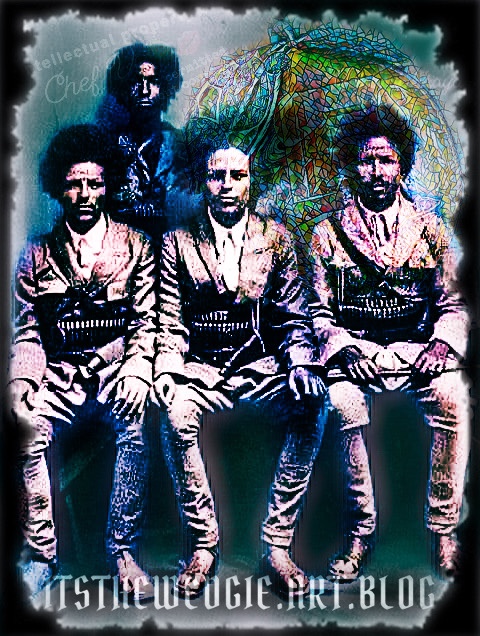
Rastafarianism— however is something entirely separate. It was born in the 1930s when Ras Tafari was crowned emperor of Ethiopia.
When the emperor was forced into exile during an invasion, guerrilla warriors swore not to cut their hair until the emperor was reinstated. The religion resonated with the ideologies of the day, for example socialism, Marxism, nationalism and black power.
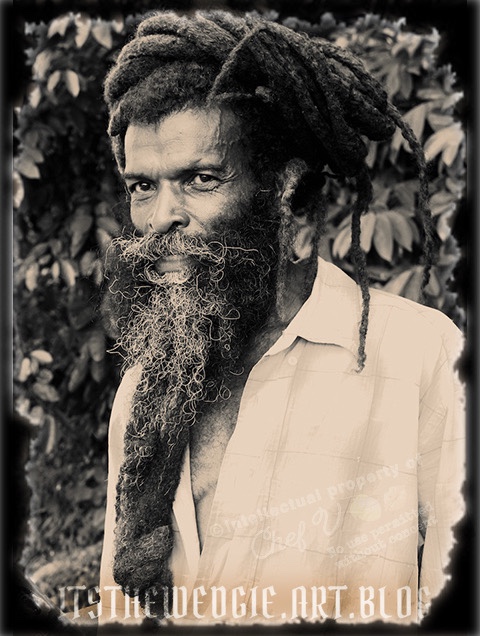
It was therefore, seen as a threat to Christianity and came under attack by the authorities that tried to suppress the ‘Rasta’ movement and imprisoned those who possessed ‘ganja’. Rastafarians smoked cànnabis because they thought it prompted a clearer state of well – being. Their locs were thought to be disgusting and frightening, hence the term ‘dread’ which was later reclaimed by the ‘Rasta’ community.

Photo courtesy of The National Library of Jamaica
The hairstyle was later brought into mainstream culture through the worldwide success of reggae artist Bob Marley. Sporting locks himself, he prompted an international interest in the style— and the anti establishment philosophy of Rastafarian culture.
Locs became increasingly popular and there are many reasons in various cultures for wearing them. They can be an expression of deep religious or spiritual convictions, a manifestation of ethnic pride. They can make a political statement, or simply be a fashion preference.
Locs a popular fashion staple for many people today, and in some cases, not at all linked to culture or religion.
Europeans do not have an across the board culture of wearing locs. The few instances of there appearing to be locs in ancient but not modern populations is because they weren’t actually locs. The Barbarian class sported ‘Muddy Braids’. These braids featured brushed hair, coated with mud to simulate textured hair. It was done to make the warriors look unclean, or war torn.
When it comes to modern America, the invite of cultural appropriate debate over purebred white folks sporting locs has been at the forefront of debate for decades.
Not one of the Caucasian folks I’ve met who wears locks gets “praised” for their look. Each individual has stories of discrimination and harassment by folks of all racial backgrounds for wearing their hair in the style they choose. Ive met African descendants who are discriminated for wearing a platinum blond wig.
Infact— I’ve never known any individual-despite race- to not be harassed at one point during their coming up about their hair style choices. Cultural appropriation goes beyond just hair. The last time I checked— culture wasn’t assigned to a skin color.
The majority of cases where I’ve seen people cry “cultural appropriation” have been nothing more than misdirected anger at best— and extreme violence and abuse at worst.
I’m a very spiritual person and heavily believe that locks are simply a way of expression. That being said, I also understand that the growth process and proper care of an individuals locs are an intricate part of their spiritual journey.
Surprisingly to many, the fact is dreadlocks tend to dread faster the cleaner they are. People with dreads are encouraged to wash their hair more often depending on hair texture, to quicken the locking and matting process, so it’s really inaccurate to assume that people with locs do not wash their hair and keep it messy.
The naturally unclean look of any persons locs—regardless of race—is because their scalp has more oil festering on it than the canola oil used to fry last night dinner rush at Popeyes. They need a wash! The truth is manicured locs can be just as professional looking as any straight textured style.
Typically, cultural appropriation involves the exploitation of the culture of less privileged groups by members of a dominant group. Groups often targeted for cultural appropriation tend to be African Americans, Native Americans, and Asian Americans. Instead of being angry about what is perceived to be the cultural appropriation of dreadlocks, we need to be upset about the debilitating stereotypes that come with it. By openly discussing locs and educating ourselves and others, we can hopefully erase the stigma for those who choose to wear them and help our society to be more open-minded when it comes to differences of all types.
-🍋💋
 🚢💋SEDONA SUNSETS💋🏴☠️