What quality do you value most in a friend?
Trailer Trash Annie proudly presents 41 years of trauma and therapy learning, in 15 minutes!!!


Happy Pre-Friday, gentle reader.
Today’s prompt finds your author attempting to be as tolerant as a peri-menopausal woman can be with hot flashes on the third forecasted 102 degree desert day of the 2024 summer.
If you’re a guy or you’ve never had the distinct pleasure of this particular experience, imagine having the flu and sitting in a sauna that is actively on fire.
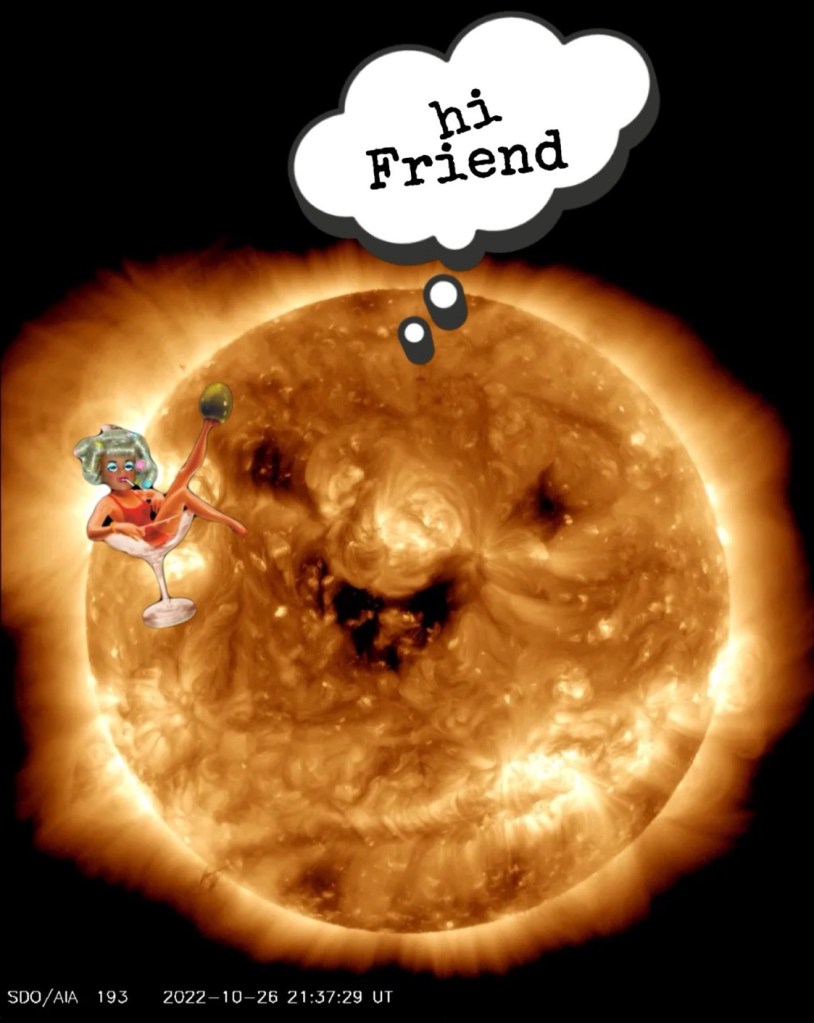
Better yet, covid and a court-side seat on the surface of the sun.
I could go all willy nilly and drone a solid five minute read out of a simple quality- which understandably is the assignment.
Yet, there are people who come to these pages searching for a moment of value.
Do you dare?

In order to understand friendships and how your author views them and their qualities. You must first understand the basis of your authors core damage.
Your author was an abandoned baby.
Before you stop and issue an ounce of sympathy, please understand that it is not needed nor necessary. Your author has already made peace with these facts.
A federal study conducted in 2022 by the National Safe Haven Alliance found that at least 22,000 babies are left in hospitals annually by parents who are unwilling or unable to care for them. There are no records for the class of 1982 because back then, much like today, people think it’s okay.
I however was extremely lucky to be privately adopted into a home before my release from the hospital.
To be honest, now that I’m older… I can just tell you my parents were meant to be my parents. I’ve yet to meet another soul willing to put up with my ignorant bullshit and still laugh and unconditionally love me like they have for 41 years.
But, understanding what creates that kind of unbreakable bond again loops back to what was created within me at the time of my birth.
Reactive Attachment Disorder (RAD) is a severe and relatively rare condition found in children who have experienced significant early life disruptions in their primary caregiving relationships. It typically arises from grossly inadequate care, such as severe neglect, abuse, or frequent changes in caregivers, particularly in the early developmental stages.
SHOUTOUT TO GARY AND DARLENE FOR THE LIFELONG GIFT!!!!
Children with RAD may exhibit a lot of the same behaviors throughout their lifetime. Your authors looked something like this:
- Emotionally Withdrawn-Inhibited Type: These children are emotionally withdrawn from caregivers, seldom seeking comfort or responding to attempts at comforting.
- Indiscriminately Social-Disinhibited Type: These children may show inappropriate familiarity with strangers, displaying overly familiar behavior that is inconsistent with culturally sanctioned and age-appropriate social boundaries.
- Difficulty forming emotional bonds: Limited ability to form meaningful, secure attachments with caregivers.
- Lack of social responsiveness: Minimal social engagement, limited positive affect, and episodes of unexplained irritability or sadness.
- Behavioral issues: Difficulties in controlling emotions, aggressive behavior, and difficulty in managing stress.
It is important to note that I also was not a very communicative child. Combined with undiagnosed AD(h)D, I have always had extreme trouble controlling my thoughts and communicating them in a verbal way that makes sense.
It is also very apparent in my writing on the days I am highly triggered!
But again, I must point out that back in the 1980s my parents would not have known what to look for as mental health conscious was not yet a main stream thing.
RAD is diagnosed based on a comprehensive assessment of the child’s behavior and history. It is important for clinicians to differentiate RAD from other disorders with similar symptoms, such as autism spectrum disorder, to ensure appropriate treatment.
RAD diagnosis’s in adults are even more difficult because the individuals history has probably been very traumatic. Leaving them with debilitating, anxiety, and depression. In severe cases, the individual has developed PTSD and is unable to actively recall the specific triggers due to traumatic dissociation.
Effective treatment for RAD typically involves:
- Therapeutic Interventions: Attachment-based therapies focusing on building trust and security between the child and caregiver or adult to adult.
- Training: Educating and supporting caregivers to develop more sensitive and responsive caregiving practices.
- Consistent and Safe Environment: Providing a stable and nurturing environment for the individual to promote the development of healthy attachments.
Without appropriate intervention, children with RAD may face long-term challenges, including difficulties in relationships, emotional regulation, and social functioning.
In other words, you could end up being a 41 year old who’s been sitting at home for the past 17 months, unable to function and currently observing her own heartbreak like some uncontrollable out of body experience. (if my therapist wasn’t a chick, the 4 calls a week may seem like infidelity.)
Early, targeted intervention can significantly improve outcomes, helping children develop healthier attachment patterns and improve overall well-being.
In summary, RAD is a complex disorder stemming from early life caregiving disruptions, requiring comprehensive, multi-faceted approaches for effective treatment and long-term positive outcomes.
If you want to be my friend, then you absolutely need to have enough compassion to accept that I am damaged beyond repair.
And that I have made my peace and chosen to continue to evolve in a positive direction.
Thanks for taking the time to read today. It means a lot to know that someone out there is willing to listen to me!

 🚢💋SEDONA SUNSETS💋🏴☠️